
John Berger
Ways of Seeing, the Booker Speech and a Village in Haute-Savoie
John Berger, born 5 November 1926, made Ways of Seeing, won the 1972 Booker with G. and gave half the money away. His centenary, his books and his years in Quincy.
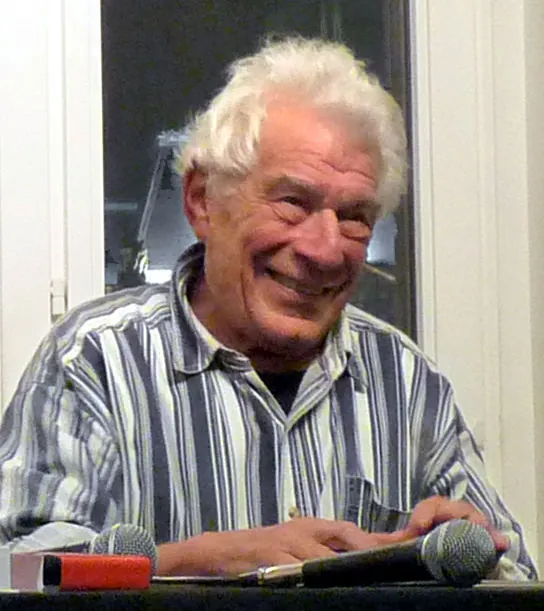
Photo: Ji-Elle, CC BY-SA 3.0, via Wikimedia Commons. Resized and converted to WebP.
From Life, Launched at Newington Green
John Berger would have turned 100 on 5 November 2026. The year has filled up with work about him. On 28 October 2026 the writer and curator Tom Overton launched his biography, From Life, published by Allen Lane, at the Newington Green Meeting House, in conversation with Gareth Evans. Overton spent 15 years on the book. He is Archive Curator at the Barbican Centre, and before that he catalogued Berger's papers at the British Library. The event listing quotes the line Berger used when he rang him: "This is John. John Berger. Can I tell you a story?"
The centenary programme gathered on the John Berger home site runs across three countries. In Basel, the exhibition GO CLOSER - John Berger Through His Art opened at the Villa Renata on 12 September and runs to 31 October 2026. In Lausanne, Simon McBurney and Complicite are staging Questions for John at the Theatre Vidy from 22 October to 8 November. The British Library held a display and reading on 23 October. Canongate has published To Tell a Story, a book of Berger's dialogues with Susan Sontag edited by Benoit Bourreau, and Objectif Press issued Four Horizons by John Christie in June.
St Edward's, Chelsea and a Barracks in Belfast
Berger was born in London on 5 November 1926 into a middle-class family. He was sent to St Edward's School in Oxford and left it at 16. The Guardian's obituary says he went to the Central School of Art; the Irish Times puts it more bluntly, saying he ran away from school and began studying art.
He was drafted in 1944 and posted to Northern Ireland, where he served as a lance-corporal in the Oxfordshire and Buckinghamshire Light Infantry. The barracks in Belfast gave him his first long contact with men from a background unlike his own. He described it to the Guardian in 2005, in a passage Al Jazeera quoted after his death: "I lived among these raw recruits ... it was the first time I really met working-class contemporaries. I used to write letters for them, to their parents and occasionally their girlfriends."
After the army he studied at the Chelsea School of Art from 1945 to 1947. He never went to university.
Ten Years at the New Statesman
Berger started as a painter. He taught drawing at St Mary's, the teacher training college at Strawberry Hill, and showed his own work at the Leicester, Redfern and Wildenstein galleries in London. In 1952 he began writing art criticism for the New Statesman, a post he held for ten years. His book Permanent Red came out in 1960.
In 1967 he published A Fortunate Man with the photographer Jean Mohr. The two would work together again on the book that the Booker money paid for.
Ways of Seeing in a Hut in Ealing
In 1972 the BBC broadcast Ways of Seeing, four half-hour programmes that were filmed, according to the Guardian, in a hut in Ealing.
The book that came out of it has never gone out of print, the Guardian wrote in 2017. Al Jazeera reported that it had become a common text on university courses.
G. and the Speech at the Cafe Royal
The same year brought his novel G., published by Weidenfeld & Nicolson on 8 June 1972. It won the Booker Prize, along with the James Tait Black Prize and the Guardian Fiction Prize, according to the Guardian.
The Booker was then worth five thousand pounds. Berger accepted it at the Cafe Royal on Regent Street on Thursday 23 November 1972, and used the speech, which the Booker Prizes now publish in full, to attack the sponsor. Booker McConnell had held trading interests in the Caribbean for more than 130 years, he said, and he tied the prize money to the slave labour behind that trade. "This is why I have to turn this prize against itself," he told the room. He gave half the money to the London-based Black Panther Movement. Al Jazeera quoted his line: "I intend as a revolutionary writer, to share this prize with people in and from the Caribbean".
The other half went to a four-year project with Jean Mohr on Europe's migrant workers, which he estimated would cost about ten thousand pounds. It became A Seventh Man, published in 1975.
The Guardian prize had its own coda. The paper's obituary records that its editor, Alastair Hetherington, offered to double the Guardian Fiction Prize if Berger gave half of it to a constructive cause. Berger accepted the cheque "with warmth and grace."
Geneva, Then Quincy in Haute-Savoie
Sources disagree on when Berger left Britain. The Guardian and the Booker Prizes' author page say he left permanently in 1962, and the Guardian has him settling in Geneva. The Irish Times gives a later date, saying he left London in 1974 for Paris and then Geneva.
From 1974 he lived in Quincy, in Haute-Savoie, which the John Berger home site describes as a small French peasant community. The village became the setting for his trilogy about rural life: Pig Earth in 1979, Once in Europa in 1987 and Lilac and Flag in 1990, collected as Into Their Labours in 1992.
Berger also wrote with the director Alain Tanner on three films, among them Jonah Who Will Be 25 in the Year 2000, released in 1976.
Photocopies, To the Wedding and the Last Books
About Looking came out in 1980. The novel To the Wedding followed in 1995, with its royalties going to London Lighthouse. Photocopies appeared in 1996. From A to X was longlisted for the Booker Prize in 2008, 36 years after G. won it.
His Collected Poems came out in 2014 and Confabulations in 2016. That year also brought The Seasons in Quincy: Four Portraits of John Berger, a film made with Tilda Swinton.
Three Marriages and the Children
Berger married three times. His first wife was Pat Marriott, whom he married in 1949; they divorced. He married Anya Bostock in the mid-1950s, and they had two children, Katya and Jacob, before separating in the 1970s. His third wife was Beverly Bancroft, an American, with whom he had a son, Yves. Bancroft died in 2013.
All three children work in the arts. Katya Berger is a writer, Jacob Berger a film director, and Yves Berger an artist and writer who co-curated the Basel centenary exhibition.
The British Library Archive
In 2009 Berger and Bancroft gave his archive to the British Library: manuscripts, notebooks, sketchbooks and recordings. The Guardian reported that it is open to the public. Overton's work cataloguing it is the ground his biography stands on.
Berger had been ill for about a year when he died at his home in Antony, a suburb of Paris, on 2 January 2017, aged 90.
Sources
- John Berger obituary | John Berger | The Guardian
- John Berger, author of 'Ways of Seeing', dies aged 90 | Arts and Culture | Al Jazeera
- Obituary: John Berger - The Irish Times
- G. | The Booker Prizes
- 'I have to turn the prize against itself': John Berger's 1972 Booker Prize speech in full | The Booker Prizes
- Centenary - John Berger home
- John Berger at 100 | Book launch: "John Berger: From Life" | Tom Overton - calendar
- The New Way of Seeing: In Anya Berger's Archives by Emily Foister
Filed Under Topics
Related Life Stories & Dossiers
Further inspiring trajectories within Art & Literature and influential circles.
 Art & Literature
Yoshiyuki Tomino
Yoshiyuki Tomino started at Mushi Production in 1964 and directed Mobile Suit Gundam in 1979. His path, his later series, his honors and the franchise's size.
 Art & Literature
Peter Hitchens
Peter Hitchens, born in Malta in 1951, went from Trotskyist student to Moscow correspondent to Mail on Sunday columnist and won the 2010 Orwell Prize.
 Art & Literature
Dale Brown
Dale Brown, the Buffalo-born former Air Force captain who created Patrick McLanahan, on his B-52 years, Flight of the Old Dog, and his later series.