
Ilya Sutskever
Ilya Sutskever co-invented AlexNet, co-founded OpenAI, voted to remove Sam Altman in 2023, then left to build Safe Superintelligence, a lab with no product.
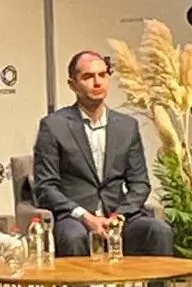
Photo: Eladkarmel, CC BY-SA 4.0, via Wikimedia Commons. Resized and converted to WebP.
Admitted to Toronto Out of Grade 11
The University of Toronto, which gave Sutskever an honorary Doctor of Science in June 2025, describes his route to its mathematics department in three moves: born in Russia, raised in Israel, and brought to Canada by his family as a teenager. The university admitted him to its mathematics program straight out of Grade 11. No page opened for this article states the date or the city of his birth, so the sidebar gives neither.
He finished an honours bachelor's degree in mathematics in 2005 and stayed in Toronto for a master's and a doctorate in computer science. The university names Geoffrey Hinton as his doctoral supervisor. The Royal Society, which elected him a Fellow in 2022, records the Toronto doctorate in computer science and credits him as a co-inventor of AlexNet and of sequence-to-sequence learning.
AlexNet and the DNNResearch Sale to Google
In 2012 Sutskever, Alex Krizhevsky and Hinton built AlexNet, a convolutional neural network that identified objects in an image database far more accurately than the competing approaches of the time. The University of Toronto calls the resulting paper one of the most cited academic papers of this century.
He then joined DNNResearch, the company Hinton spun out of the lab, which Google later acquired, and worked as a research scientist at Google Brain. The university also credits him with contributions to AlphaGo and with co-developing sequence-to-sequence models. Neither the university nor TechCrunch gives the date of the DNNResearch sale or the dates of his years at Google.
Research Director at OpenAI, 2015
Sutskever left Google Brain in 2015 to co-found OpenAI, which began operating late that year. The University of Toronto lists his first title there as research director. He later became chief scientist, the title the Royal Society still shows on his fellowship page, which was written before he left.
In July 2023 OpenAI formed a Superalignment team with Sutskever and Jan Leike as its leads.
The Board Vote of November 2023
In November 2023 the OpenAI board, which included Sutskever, moved to remove Sam Altman as chief executive, saying he had not been "consistently candid" with it. Sutskever then signed the employee letter that threatened a mass resignation unless Altman was reinstated. TechCrunch, citing The New York Times, reported that he never returned to work afterwards and that Jakub Pachocki had in effect been chief scientist since that month.
What he had done before the vote came out in court two and a half years later. Testifying in Musk v. OpenAI in May 2026, as Ctech reported, Sutskever said he had spent about a year gathering evidence for the board of what he called a "consistent pattern of lying" by Altman, had prepared a 52-page document at the board's request, and had discussed Altman's removal with Mira Murati. Of his reversal he said: "I felt that, had I not done this, the company would be destroyed."
The Departure Announced on May 14, 2024
Altman announced on X on May 14, 2024 that Sutskever had left OpenAI, and named Pachocki, until then director of research, as his replacement. In the same post Altman recalled that Sutskever had officiated at his civil wedding ceremony. Leike resigned the same month. TechCrunch understood at the time that the Superalignment team's work would be folded more deeply into the rest of OpenAI's research rather than continue as a separate group.
Safe Superintelligence, Palo Alto and Tel Aviv
A month later, in June 2024, Sutskever launched Safe Superintelligence Inc. with Daniel Gross and Daniel Levy. The company's own site lists offices in Palo Alto and Tel Aviv and states the whole plan in one sentence: "We plan to advance capabilities as fast as possible while making sure our safety always remains ahead." Two funding rounds later, it still had no product.
$1 Billion at $5 Billion, Then $32 Billion
In September 2024 the company said it had raised more than $1 billion from NFDG, the fund run by Nat Friedman and Gross, together with Andreessen Horowitz, Sequoia, DST Global and SV Angel. The money was to be split between the two offices. TechCrunch reported that Reuters, citing a source, put the valuation at $5 billion.
The second round took the valuation from $5 billion to $32 billion. Ctech reported $2 billion at a $32 billion valuation, led by Greenoaks with a reported $500 million, alongside Andreessen Horowitz, Lightspeed Venture Partners and DST Global, with Alphabet and Nvidia also among the backers. SiliconANGLE places the $32 billion valuation in April 2025. The $2 billion figure and the Greenoaks lead rest on Ctech alone among the pages opened for this article.
Daniel Gross Leaves for Meta, July 2025
Meta's recruiting for its new AI lab reached SSI in the summer of 2025. SiliconANGLE and Reuters both reported that Meta had tried to buy the company, then valued at $32 billion, and to recruit Sutskever, who turned the offer down. Meta hired Gross instead. On July 3, 2025 Sutskever announced on X that he had become chief executive, while continuing to oversee the technical teams.
Nvidia's $5 Billion, July 2026
On July 27, 2026 Reuters, citing a person briefed on the deal, reported that Nvidia had agreed to invest $5 billion in SSI in exchange for equity. Bloomberg had reported the amount first. Neither company disclosed the terms, and the report gave no valuation. Under the deal SSI receives Nvidia's Vera Rubin hardware and more compute. The figure rests on that single Reuters report, carried by The Star.
Fellow of the Royal Society, 2022
The Royal Society elected Sutskever a Fellow in 2022. The University of Toronto awarded him a Doctor of Science, honoris causa, at its June 2025 convocation, and its announcement notes that TIME named him among its 100 most influential people in AI in 2023 and 2024.
A $7 Billion OpenAI Stake
The only wealth figure on the record is one Sutskever gave under oath. On May 11, 2026, testifying in Musk v. OpenAI in federal court in Oakland, he said his OpenAI stake was worth roughly $7 billion, up from about $5 billion in November 2025. Bloomberg Law and Ctech both reported the figure and described him as one of the company's largest individual shareholders. He did not state the percentage.
That number is one asset, not a net worth. His stake in SSI, a company valued at $32 billion in April 2025 before Nvidia's $5 billion, is not disclosed on any page opened for this article, and no third-party estimate was opened either. FamousBio therefore computes no figure and the sidebar shows none. Any total would have to add an undisclosed share of SSI to the $7 billion and allow for tax and later dilution, none of which is known.
Sources
- Ilya Sutskever, a leader in AI and its responsible development, receives U of T honorary degree | University of Toronto
- Dr Ilya Sutskever FRS | Royal Society Fellow
- Ilya Sutskever, OpenAI co-founder and longtime chief scientist, departs | TechCrunch
- Ilya Sutskever reveals $7 billion OpenAI fortune during trial | Ctech
- Sutskever Says His OpenAI Stake Worth About $7 Billion
- Safe Superintelligence Inc.
- Ilya Sutskever's startup, Safe Superintelligence, raises $1B | TechCrunch
- Ilya Sutskever's Safe Superintelligence raises $2B at $32B valuation-with no product | Ctech
- Safe Superintelligence CEO Daniel Gross joins Meta's new AI lab - SiliconANGLE
- Sutskever à la tête de Safe Superintelligence après le débauchage du directeur général Gross par Meta dans le cadre de la guerre des talents en matière d'IA - 03/07/2025 à 23:52 - AMP Boursorama
- Nvidia to invest $5 billion in Ilya Sutskever's AI startup, source says | The Star
Filed Under Topics
Related Life Stories & Dossiers
Further inspiring trajectories within Technology and influential circles.
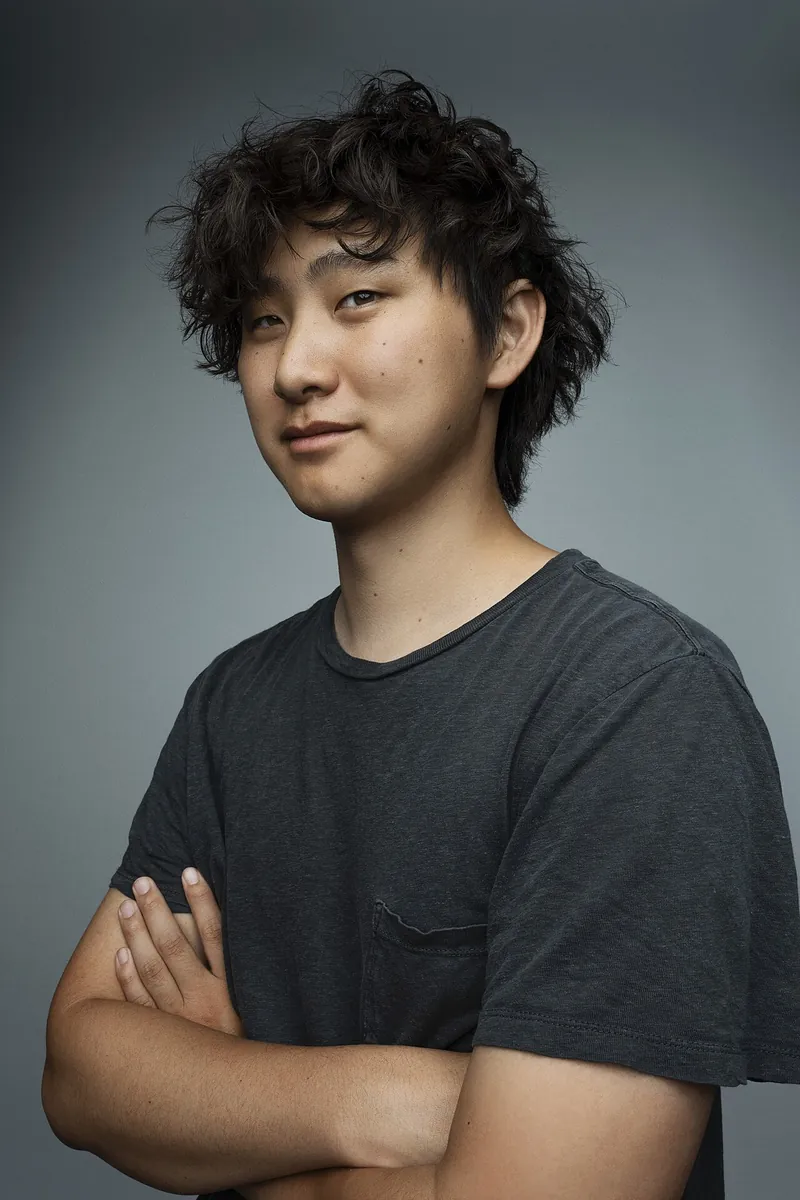 Technology$3.2 Billion
Alexandr Wang
Alexandr Wang left MIT after one year to start Scale AI, sold Meta a 49% stake for $14.3 billion in 2025, and now runs Meta Superintelligence Labs.
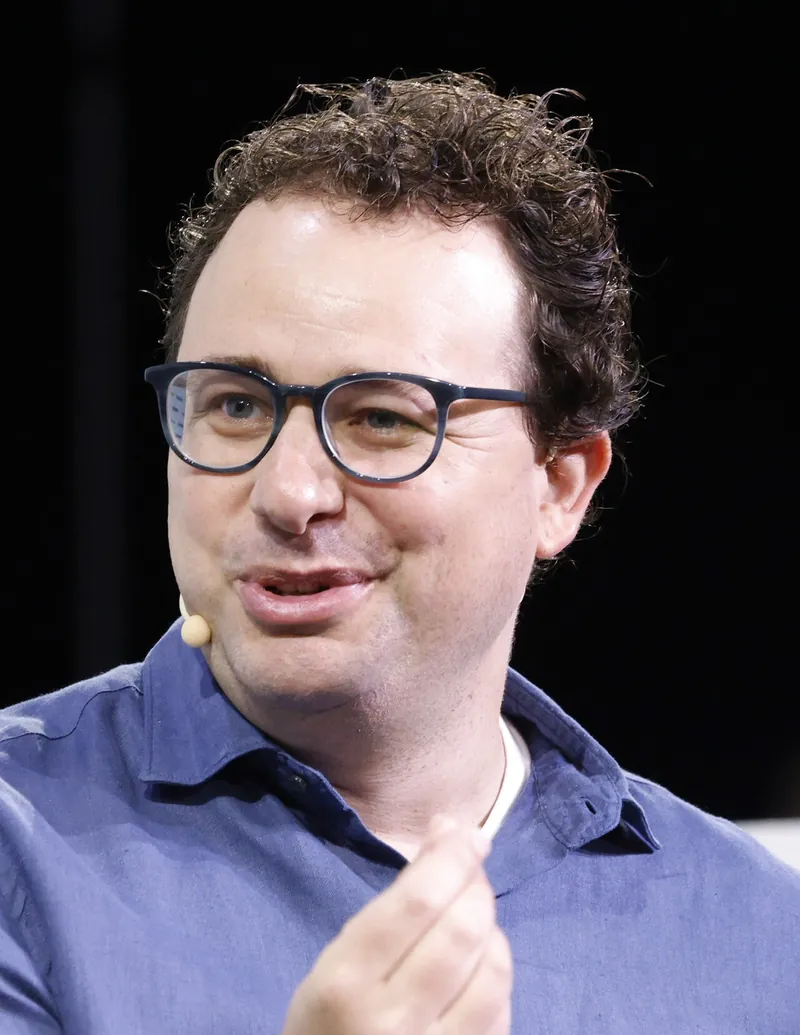 Technology$15.5 Billion
Dario Amodei
Dario Amodei trained as a biophysicist, ran research at OpenAI, then co-founded Anthropic in 2021. How the company reached a $965 billion valuation.
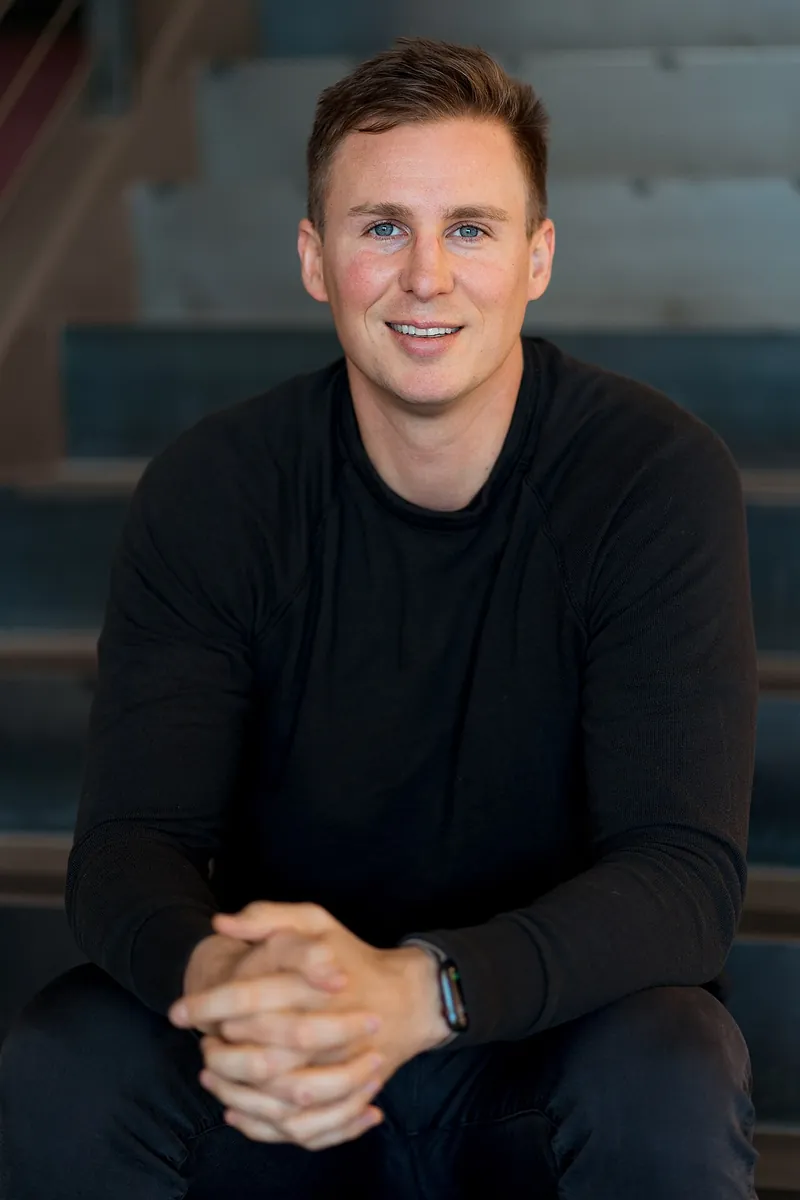 Technology$23.4 Billion
Brett Adcock
Brett Adcock co-founded Vettery and Archer Aviation, then started Figure AI in 2022. How the humanoid robot maker reached a $39 billion valuation.