
Gadi Eisenkot
Gadi Eisenkot, born in Tiberias in 1960, led the IDF from 2015 to 2019, published its first formal strategy, then founded the Yashar party to run against Netanyahu.
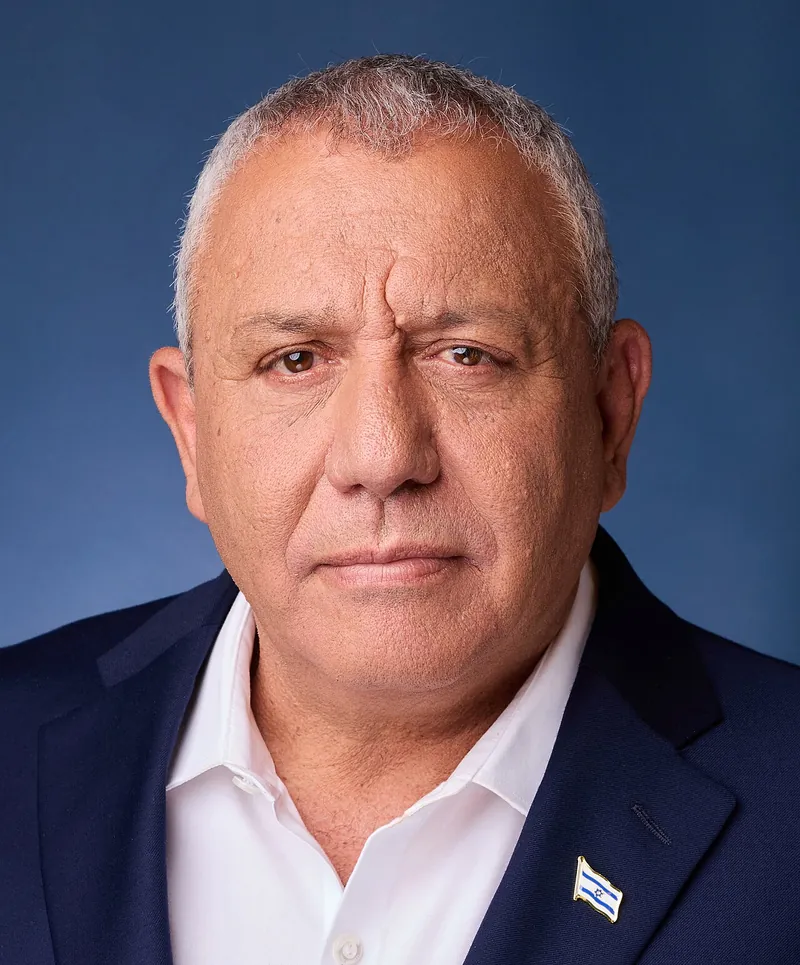
Photo: יהב טרודלר (Yahav Trudler - Yahav Studio), CC BY-SA 3.0, via Wikimedia Commons. Resized and converted to WebP.
Tiberias, Eilat and the Goldwater High School
Gadi Eisenkot was born on 19 May 1960 in Tiberias. His parents, Meir and Esther, were Jewish immigrants from Morocco who came to Israel in the 1950s, according to the Jewish Virtual Library and The Jerusalem Post. Fox News reports that the family moved to Eilat when he was a toddler, and he grew up there.
In Eilat he attended Goldwater High School, where he studied in the maritime track. His later education came alongside his army career: a bachelor's degree in history from Tel Aviv University, a master's degree from the US Army War College (an M.S. in Strategic Studies, according to The Jerusalem Post), and graduate study in political science at the University of Haifa.
One Month in the Pilot Course, Then the Golani Brigade
Eisenkot enlisted in 1978. He started in the air force pilot course and left it after a month, then joined the Golani Brigade. Nearly two decades later he commanded the brigade, in 1997 and 1998.
In 1999 he became military secretary to Ehud Barak, who was then both prime minister and defense minister. He then returned to field command, leading the 366th Division and then the Judea and Samaria Division in the West Bank.
The Operations Directorate and Northern Command
Eisenkot went on to head the General Staff's Operations Directorate and then Northern Command. The Jewish Virtual Library dates his appointment to Northern Command to 2006. He later served as deputy chief of staff; the sources disagree on when that began, with the Jewish Virtual Library giving 2013 and The Washington Institute giving 2012.
The Jerusalem Post links him in these years to what became known as the "Dahiya Doctrine," which it describes as an approach of causing heavy damage to civilian infrastructure used by militant groups. The label is the newspaper's characterization of his thinking at the Operations Directorate and Northern Command.
The 21st Chief of the General Staff
In 2015 Eisenkot succeeded Benny Gantz as the 21st chief of staff of the Israel Defense Forces. He held the post until January 2019, when he retired after about 40 years in uniform.
Two named operations came late in his term, according to The Jerusalem Post. Operation House of Cards, in May 2018, struck Iranian targets in Syria. Operation Northern Shield, which ran from 2018 into 2019, went after Hezbollah's tunnels. The Post describes his tenure as one of the quietest in Israel's history.
Fox News reports that he received the US Legion of Merit from Gen. Joseph Dunford and that he spent 2019 as a military fellow at The Washington Institute for Near East Policy.
The August 2015 IDF Strategy Document
In August 2015, months into his term, the army published the IDF Strategy, its first formal doctrine, with a foreword by Eisenkot. It came out in Hebrew only. The Belfer Center for Science and International Affairs posted an English translation on 16 December 2024, which spells his name "Eizenkot" in the body.
The document sets out five principles for the use of force: deterrence, early warning, defense, defeating the enemy, and victory. It sorts the army's work into three situations, routine, emergency, and war. It introduced the "Campaign Between Wars," a mix of covert and overt action meant to weaken enemies and push back the next war. It names ground maneuver as the main path to victory, makes the chief of staff the sole commander of a campaign, and puts building offensive force ahead of defensive. It was tied to the army's multi-year "Gideon" plan.
In the foreword he wrote: "Formulating the strategy is not the supreme test; the proof lies in the implementation."
National Unity and the Emergency Government of October 2023
Eisenkot entered politics before the 2022 election by joining National Unity, the party led by Benny Gantz, his predecessor as chief of staff. The Jewish Virtual Library dates the move to August 2022. He went on to sit in the Knesset for the party.
After 7 October 2023, he joined the emergency government as a minister without portfolio. The Jerusalem Post reports that he sat in the war cabinet as an observer and that he opposed a pre-emptive strike on Hezbollah that would have widened the war while the Gaza campaign was under way.
Eisenkot is married and has five children. On 7 December 2023 his son Gal, 25, a reservist, was killed in northern Gaza. The Jerusalem Post quotes Eisenkot as saying: "I want to channel the loss into something positive, into a place of being worthy, to carry forward their path."
In June 2024, about eight months after joining, Eisenkot and Gantz left the government. TBS News reports that he saw no clear strategy for the period after the war. Fox News reports that he blamed the prime minister "for failing to implement a comprehensive strategy," and he later accused Benjamin Netanyahu of prolonging the war.
A One-Sentence Letter to Speaker Amir Ohana
In mid-2025 Eisenkot left both National Unity and the Knesset. On 2 July 2025, The Times of Israel reported, he submitted a one-sentence resignation letter to Knesset Speaker Amir Ohana. He said his goal was to "replace this bad government and establish a Zionist, patriotic, statesmanlike, democratic alternative." The Jewish Virtual Library adds that he spoke of democratic reforms such as open primaries.
In September 2025 he founded a new centrist party, Yashar, in full "Yashar! Im Eisenkot." The word means "straight" in Hebrew. TBS News reports that the name draws on a phrase attributed to Eli Sharabi, a hostage held in Gaza. The party's slogan, according to The Jerusalem Post, is "Israel must win."
Yashar in the Polls Before 27 October 2026
By the autumn of 2026, Fox News and The Jerusalem Post were describing Eisenkot as Netanyahu's main challenger. Fox News quoted the analyst Danny Orbach as saying that Eisenkot "has emerged as the default 'non-Bibi' candidate."
A Zman Yisrael poll taken on 14 and 15 October 2026, published by The Times of Israel, gave Yashar 26 seats to Likud's 20, with neither bloc reaching a Knesset majority. The Jerusalem Post's poll average on 18 October put Yashar at 21.5 seats and Likud at 19.
The Preliminary Count of 28 October 2026
Israel voted on 27 October 2026. The results below are preliminary. They come from The Times of Israel's update of 28 October 2026, with 89.8 percent of votes counted, and the seat numbers may still change. The double-envelope ballots, estimated at about 430,000 to 480,000, were being counted from 1 a.m. on Thursday, and official final results are expected on 4 November.
At that count, Likud led with 26 seats and Yashar was second with 21, below its standing in the October polls. B'Yachad, led by Naftali Bennett, and the Joint List had 12 each, the Democrats 8, and Otzma Yehudit, Shas, United Torah Judaism, Ra'am, and Yisrael Beytenu 7 each, with Religious Zionism at 6.
By The Times of Israel's grouping, Netanyahu's bloc held 53 seats and the bloc around Eisenkot, made up of Yashar, B'Yachad, the Democrats, and Yisrael Beytenu, held 48. Arab-led parties had 19 seats, a record. With the count unfinished, no final result or government had been settled as of this article's publication.
Sources
- Gadi Eisenkot
- Who is Gadi Eisenkot, the man who could beat Benjamin Netanyahu? | The Jerusalem Post
- Gadi Eisenkot | The Washington Institute
- Who is Gadi Eisenkot, the ex-IDF chief challenging Netanyahu in Israel? | Fox News
- Who is Gadi Eisenkot, the former Israeli army chief challenging Netanyahu?
- Israel Defense Forces Strategy Document | The Belfer Center for Science and International Affairs
- National Unity's Eisenkot officially resigns from Knesset | The Times of Israel
- ToI poll: Eisenkot's party opens up big lead on Netanyahu's, but both blocs short of majority
- Blocs struggle to reach Knesset majority in polls, as Gadi Eisenkot leads Benjamin Netanyahu | The Jerusalem Post
- With 90% of votes counted, Netanyahu bloc has 53 seats, Eisenkot's 48; Arab parties surge to 19
Filed Under Topics
Related Life Stories & Dossiers
Further inspiring trajectories within Politics and influential circles.
 Politics
Amy Acton
Amy Acton, the physician who led the Ohio Department of Health into COVID-19, quit in 2020 and became the 2026 Democratic nominee for governor of Ohio.
 Politics$2.3 Billion
Vivek Ramaswamy
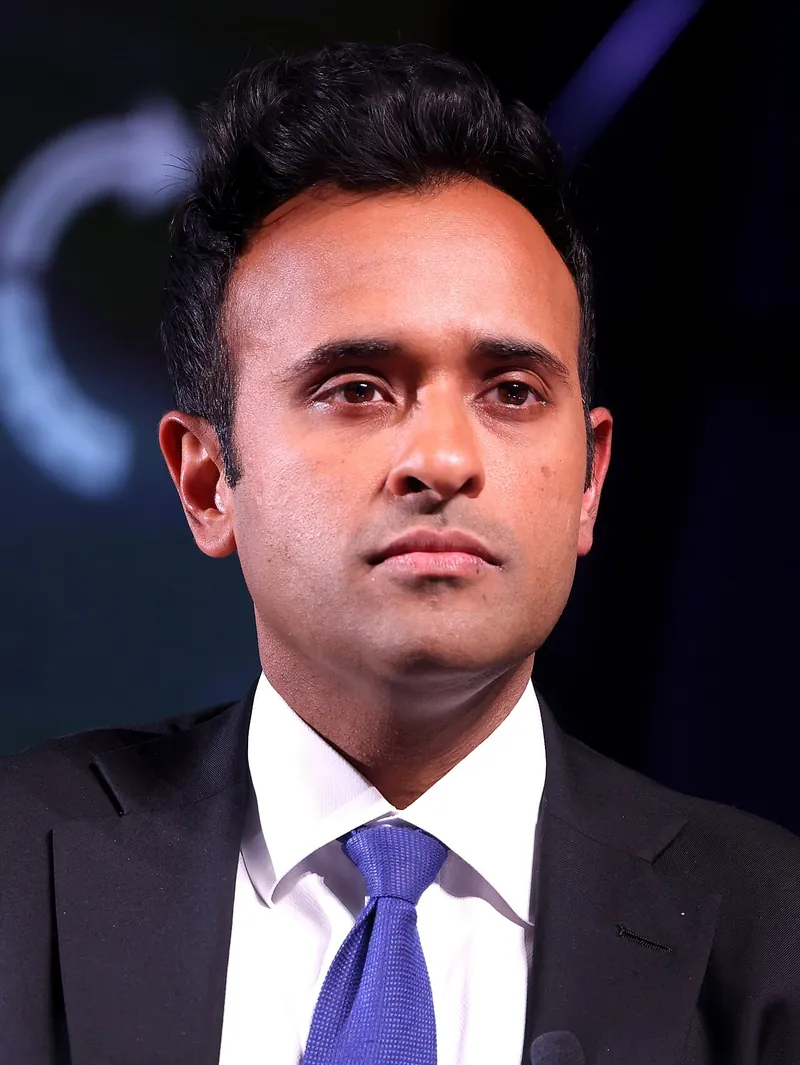
Vivek Ramaswamy founded Roivant Sciences in 2014, ran for president in 2024, briefly co-led DOGE, and is the 2026 Republican nominee for governor of Ohio.
 Politics
Helen Haines
Helen Haines, the rural midwife who followed Cathy McGowan as independent MP for Indi, was critically injured outside her Wangaratta office in October 2026.